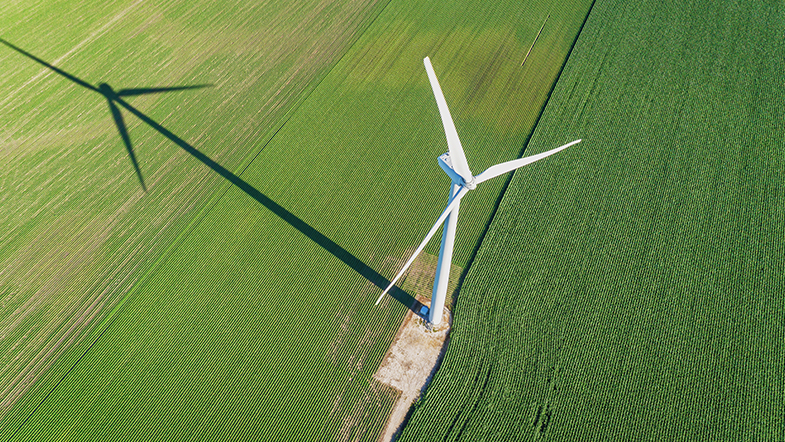
Sun Life is advancing the sustainable investing goals of the Sun Life general account through sustainability bonds.
Managing transition risk in commercial real estate
March 24, 2026
Sun Life manages transition risk in commercial real estate by measures that include reducing carbon emissions through energy efficiency, lifecycle planning, and decarbonization initiatives in office buildings.
As part of our strategy, we support the resilience of our general account investments by managing material climate-related risks that may impact our investment portfolio. Reducing carbon emissions in office buildings is one way to manage risks within the general account, contributing to a more efficient and resilient real estate portfolio.
To manage transition risk in our commercial real estate portfolio within Sun Life’s general account, we follow a four-step process that is focused on reducing emissions through efficiency, lifecycle planning and scalable pilots:
We reduce consumption by analyzing current state, including utility usage and emissions, to identify energy-saving operational adjustments with strong paybacks. We prioritize actionable opportunities and engage tenants to align our priorities.
We replace equipment based on lifecycle planning, evaluating retrofits and considering remaining useful life of building systems, while capitalizing on government incentives that are available for carbon reduction initiatives.
We evaluate switching to lower carbon energy sources, comparing costs between standard replacements and lower-carbon alternatives.
We pilot and deploy scalable solutions, leveraging successful test cases to implement best practices across the general account commercial real estate portfolio.
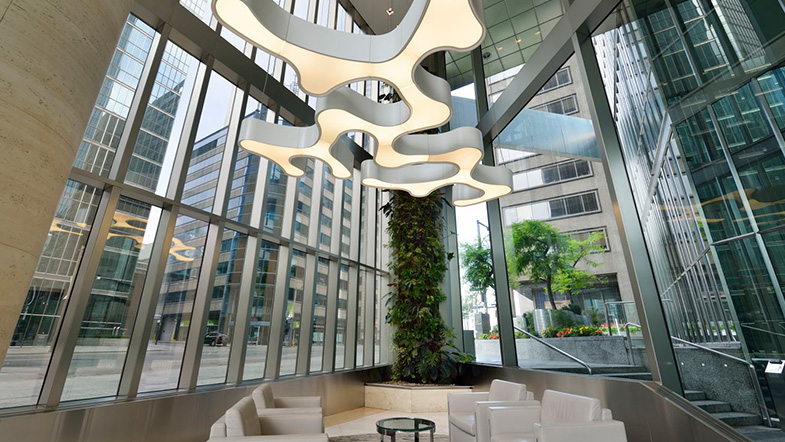
In our 150 King Street office in Toronto’s financial district, we have advanced decarbonization efforts through strategic capital investments. As part of a comprehensive renovation project in 2025, we invested $11.3 million to replace the building’s end-of-life chiller equipment with modern high-efficiency heat recovery chillers and rooftop air-source heat pumps (ASHP). The upgrades, which are to be completed by 2027, are projected to reduce operational GHG emissions by approximately 46%, and lower energy use by 20%.
Reducing carbon emissions to manage transition risk is a long-term journey. We will look to leverage the success of the Toronto project and scale its learnings across our general account real estate portfolio.
Emissions reduction in buildings creates value in many ways. It allows for lower utility costs, makes our assets more resilient, and aligns with evolving energy efficiency regulations and building codes. It's also important in meeting stakeholders’ expectations, as greener, more energy-efficiency buildings are valued in the market.