
Making the invisible, visible: advancing support for women’s chronic pain in the workplace
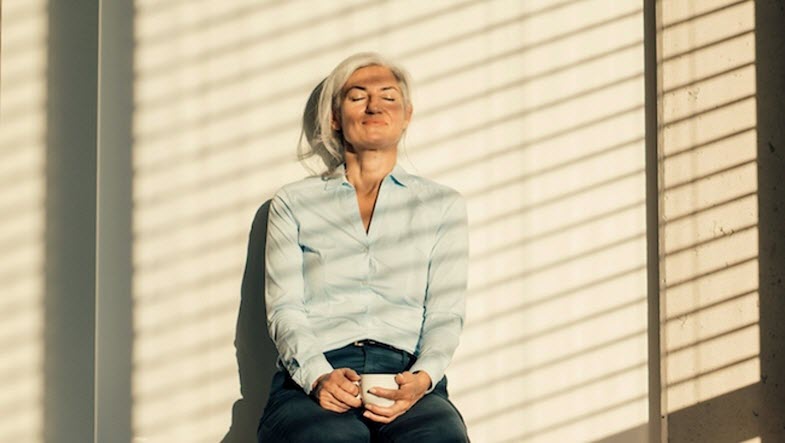
For many people living with chronic pain, the experience is not always visible – but it can impact nearly every aspect of daily life.
It can affect energy, focus, sleep, and mental well-being. It can influence how someone shows up at work, at home, and in their communities. And for many women, it’s something they continue to navigate quietly.
Yet chronic pain is far more common and more complex than many people realize.
Across Canada, millions of people live with chronic pain, and globally it impacts one in five adults. Despite its prevalence, chronic pain continues to be under-recognized, particularly when it comes to women’s experiences.
Women are disproportionately affected, often experiencing more severe symptoms and longer paths to diagnosis and care.
Bringing women’s health into the conversation
At Sunlife, these realities are helping to shape a broader conversation about women’s health in the workplace.
Through her leadership, Helena Pagano, Executive Vice-President and Chief People and Culture Officer at Sunlife, has been actively helping to bring greater visibility to topics that have historically been overlooked – from menopause and fertility to chronic pain.
“Too often, women’s health issues are experienced quietly,” says Helena. “Creating space for open, honest conversations is an important step in building understanding.”
As part of this work, Helena recently hosted a global employe well-being session focused on chronic pain in women’s health, featuring Dr. Tania Di Renna, Medical Director at the Toronto Academic Pain Medicine Institute (TAPMI) at Women’s College Hospital, who is leading groundbreaking work to close longstanding gaps in pain care for women and gender-diverse people.
The discussion reinforced a broader view. “Chronic pain is not just a symptom, it’s a disease in its own right,” says Dr. Di Renna. “It’s what happens when the pain signal continues, even when there’s no longer a physical threat.”
She adds that chronic pain is shaped not only by physical symptoms, but also by mental, emotional, and social factors – helping explain why so many people continue to “push through,” even when pain affects their daily lives.
This perspective is critical. “When health challenges aren’t constant, predictable or visible, they can be harder to talk about,” Helena adds. “That’s why awareness and empathy matter. They help create an environment where people feel seen.”
Why the workplace plays a critical role
The impact of chronic pain doesn’t stop outside the workplace.
For many employees, managing chronic pain while continuing to build a career can present real challenges – from navigating symptoms that fluctuate, to balancing health needs with work expectations.
“When pain signals are constant, they affect concentration, decision-making, sleep, and the ability to function consistently. That has an impact on how someone can show up and perform at work,” says Dr. Di Renna.
Insights from Sunlife’s women’s health research shows that many women don’t always feel their health concerns are fully understood at work. This points to an important opportunity for workplace to better support employees in managing their health alongside their careers.
“We know that when people feel supported in their health, it changes how they experience work,” says Helena. “It’s not just about having the right programs; it’s about creating a culture where people feel comfortable speaking up and accessing support when they need it.”
Advancing support for women’s health
At Sunlife, this work is part of a broader commitment to well-being. That includes creating space for open conversations, strengthening awareness, and ensuring employees have access to resources, flexibility, and support when navigating their health journeys.
These efforts are rooted in Sunlife’s Purpose: to help Clients achieve financial security and live healthier lives – and that includes our own people.
“These conversations matter,” Helena says. “They help people feel seen and they’re building momentum for change across workplaces.”
Watch the conversation
Watch highlights from the session with Dr. Tania Di Renna to learn more about chronic pain in women’s health and the role we can all play in building more supportive workplaces.

[Uplifting music begins.]
[A woman and girl in workout clothing do yoga together on yoga mats in a living room.]
[Sunlife logo.]
SUPER: Your Well-Being with Helena
HELENA: Today's conversation is on a health topic that affects more people than we realize, chronic pain.
[Music fades out.]
[Helena stands at a podium in front of a Sunlife branded back drop and addresses an audience off screen.]
SUPER: Helena Pagano, EVP, Chief People and Culture Officer, Sunlife
HELENA: In Canada, 1 in 5 people live in chronic pain. The experience tends to be higher in women than in men. I’m so happy to say that we have Dr. Tania Di Renna. She is the Medical Director at the Toronto Academic Pain Medicine Institute, and she brings this terrific holistic approach to looking at chronic pain, but recognizing the influence by physical, psychological, social factors, et cetera, and not just what shows up in a test or a scan.
[Helena and Dr. Di Renna sit side by side in cushioned chairs, speaking on a stage in front of an audience off screen.]
HELENA: When we talk about chronic pain, what does that really mean? What are some common conditions?
[The camera focuses only on Dr. Di Renna as she speaks, and jumps back and forth showing Dr. Di Renna, then both speakers.]
SUPER: Dr. Tania Di Renna, Medical Director, Toronto Academic Pain Medicine Institute
DR. DI RENNA: Pain is an unpleasant sensory and emotional experience. Chronic pain is a disease state. So, after those tissues heal—let's pretend you have a cut on your foot or burn your finger on the stove—you'll do these kinds of protective motor responses, right? And this is good in the acute pain state. But let's say that burn heals and you're still doing this and you're still perceiving pain. That is now the disease of chronic pain.
SUPER: Your pain is real, even after healing.
DR. DI RENNA: The message is no longer useful. You have a broken fire alarm bell. You're still receiving pain messages even though the area is healed and it no longer needs those protective mechanisms. When you're constantly bombarding that area with pain messages, you can't focus.
[The screen splits in half with Dr. Di Renna speaking from her chair on the right and supers coming in over a pale yellow background on the left as she speaks.]
SUPER: Chronic pain affects: Sleep, Relationships, Work.
DR. DI RENNA: Chronic pain will affect people's ability to sleep because it messes with your sleep centers, your circadian rhythms, your relationships, your ability to cope at work, or function at work.
HELENA: Let's do a little double click into that—psychological, social factors—let's talk a bit more about that stress trauma and how that influences pain.
DR. DI RENNA: Treating chronic pain with one therapy, it’s not going to work. You have to treat chronic pain with a variety of therapy.
[The screen splits in half with Dr. Di Renna speaking from her chair on the right and supers coming in over a pale yellow background on the left as she speaks.]
SUPER: Treat chronic pain with: Pharmacotherapy, Physical therapy, Mental health therapy.
That's why we use this triple approach to pharmaceuticals or pharmacotherapy, physical therapy, and psychological therapy, or mental health therapy. You need all of those three.
[Camera cuts to Helena in her chair speaking to Dr. Di Renna.]
HELENA: What advice would you give someone who's living in chronic pain, they're unsure how to have the conversation at work?
SUPER: Communication is key.
[Camera focuses on Dr. Di Renna as she speaks to Helena.]
DR. DI RENNA: I think productive communication is key. Because some of us just keep pushing until we can't do it anymore and then everything is screaming. Just saying, hey, I can't do this. These are my limits. I have to pace myself in order to function during the day.
[Camera focuses on Helena speaking to Dr. Di Renna.]
HELENA: It's amazing how exercise and some good habits are like the magic elixir to lots of things.
[Camera focuses back on Dr. Di Renna as she speaks to Helena.]
DR. DI RENNA: Seeking health services, especially health discipline services and even physician services, are really good. But there has to be an element of what can you do at home. If you go to the physiotherapist, I don't want them touching you too much, which is called passive physiotherapy. I want them to teach you how to function at home. How do I do this at home?
[A woman in workout clothing stretches on a yoga mat in her bedroom.]
[Another woman wearing workout clothing skips rope in a gym lined with windows.]
[An older couple wearing casual clothing walk their dog through a wooded area and speak indistinctly.]
DR. DI RENNA: How do I do my stretches at home? How do I go to the gym or even just walking every day?
[Camera cuts back to Dr. Di Renna speaking to Helena.]
DR. DI RENNA: I stopped going to the gym. I have two weights by my desk, and I do my squats and stuff from my office, and that's it. We put these expectations on ourselves that are really unrealistic. How do I do this in bite sized pieces so that I can actually physically function and work?
[Camera cuts back to focus on Helena speaking to Dr. Di Renna.]
HELENA: Thank you for that. You've helped us all understand the complexity, understand the interconnectivity, understand a little bit about what we could do our selves, understand where to go for resources, and really just care about helping people thrive and be their best, so all these things come together.
[Uplifting music fades in.]
[Audience applauds off screen.]
[Sunlife logo.]
[Music fades out.]